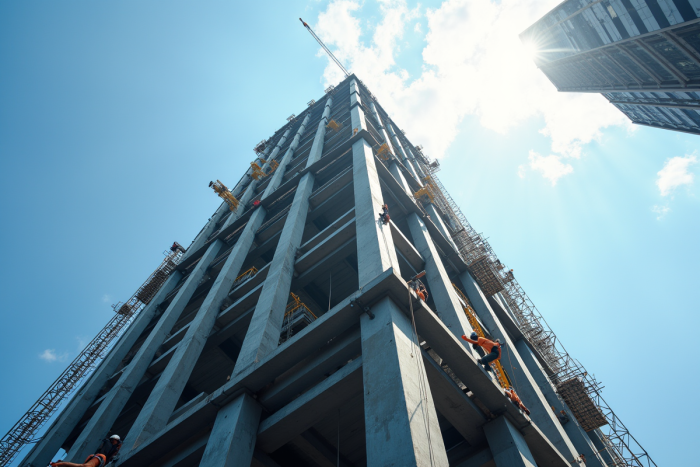
Strict seismic standards can force architects to dig much deeper than the height of the building itself. In Hong Kong, where vertical density has become second nature, towers must integrate ventilation systems all the way into their spine, lest some floors turn into traps for stale air. In Dubai, the Burj Khalifa demands the equivalent of twenty Olympic-sized swimming pools each day to run its air conditioning and ensure its maintenance.
The challenges do not stop at dizzying numbers or engineering feats. On every floor, innovation clashes with the limits of reality: physics imposes its laws, the environment asserts its rights, and humans must adjust to unprecedented conditions. Moving up a notch means reinventing the rules of the game.
Skyscrapers and dizzying heights: why building ever higher poses so many challenges?
The race to the top shapes our metropolises and chisels the profile of modern cities. Each skyscraper is not just an emblem of power; it stands as a testing ground where technical barriers accumulate: violent winds, foundation constraints, weight management, fire safety. There is no room for error when it comes to building a tower of glass and steel.
To stabilize these giants, engineers must invent tailor-made solutions. Foundations sometimes plunge down to solid rock, ensuring balance. Fiber-reinforced concrete, next-generation steel, composite materials: without this continuous evolution of techniques, aiming so high would be more about recklessness than mastery.
Horizontal space is shrinking: saturated city centers are inexorably pushing upward. But as floors stack up, a question arises: how to preserve light, ensure air circulation, and maintain communal life? Every meter gained in height complicates internal distribution, from elevators to the layout of vital networks.
Among these challenges, the tallest building in the world concentrates all tensions and technical bets. It embodies the desire to break free from constraints while highlighting the boundaries that nature and technology impose. Building higher means tackling the limit, but also questioning our relationship with the city and progress.
When ingenuity meets gravity: innovations and notable examples of extreme architecture
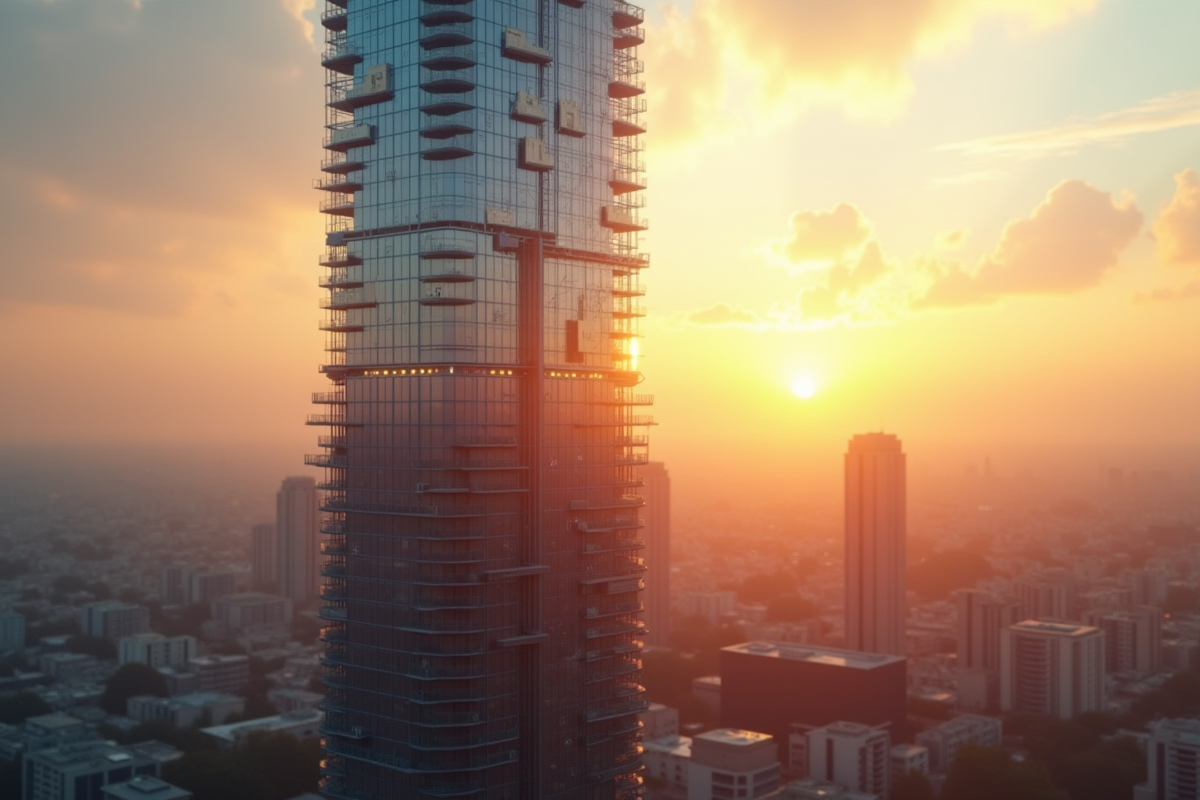
As architecture ventures into verticality, it reinvents itself. The example of the Burj Khalifa in Dubai speaks for itself: at 828 meters, it dominates the city and forces technology to push its own boundaries. Everything has been rethought: a Y-shaped structure to distribute stresses, concrete poured at night to withstand heat, sophisticated air conditioning systems capable of managing colossal needs.
Here are some major aspects that illustrate the creativity and adaptability deployed on these extraordinary construction sites:
- Cutting-edge engineering: the aerodynamic silhouette of the Burj Khalifa allows it to withstand powerful gusts, limiting the building’s movements even during extreme weather events.
- Human organization: coordinating thousands of workers and experts from around the world has made it possible to carry out a project where every detail matters, from the top to the foundations.
- The choice of materials and water management, a crucial issue in the region, have turned construction into a permanent testing ground.
Other towers are part of this dynamic, such as the Shanghai Tower at 632 meters, which spirals toward the sky while questioning how to inhabit verticality. On every floor, the challenge is to ensure comfort, safety, and communal life despite the height. The Burj Khalifa, a spectacular symbol, embodies this constant confrontation between human will, the city, and gravity.
As concrete brushes against the clouds, each new tower disrupts the urban landscape and pushes the threshold of the possible even further. And tomorrow, who knows at what altitude extreme architecture will leave its next mark?