
The calculation of the volume to be moved relies on a rule that is rarely applied to the letter: adding up the volume of each piece of furniture and box, at the risk of underestimating or overestimating the necessary space. Margins of error are common, even with experience, as the configuration of objects and space optimization vary from one home to another.
Specific tools exist to avoid inaccuracies: online calculators, reference tables, and room-by-room tracking methods. These resources facilitate planning and reduce the risks of unpleasant surprises on the big day.
Understanding the Importance of an Accurate Volume Estimate for a Successful Move
Knowing precisely how many cubic meters need to be transported is often what distinguishes a smooth move from a chaotic experience. Many try to estimate the volume of their belongings by relying on their memory or visual impressions. Bad calculation: without a method, the risk of ending up with a truck that is too small or an ill-suited storage box looms until the last box.
Everything starts with a rigorous analysis of each room and the variety of items to be moved. Here are the categories to review:
- A sofa
- A bookshelf
- Six boxes
- A coffee table
Every item counts in the final projection of the total volume to be transported. To better visualize what a space of 3 m³ represents, just consult this concrete example: what does 3 m³ represent. Through these benchmarks, it becomes easier to understand how much stuff fits in a utility vehicle or in a storage box, and to avoid unpleasant surprises.
Don’t forget the density of items, the fragility of certain furniture, or the possibility of stacking boxes and equipment. The cost of the moving quote directly stems from this estimate. Professional movers use precise grids, but it is always possible to refine your own assessment. Measuring, adding up, and creating a detailed list: this approach limits discrepancies and allows for a moving price volume that is perfectly adjusted to reality.
What Tools and Methods to Easily Calculate the Volume You Really Need?
Today, estimating the volume needed for a move or storage is no longer just about pulling out the calculator. Several approaches coexist, depending on the diversity of goods and the configuration of the home. The simplest method remains adding up the volumes of each piece of furniture or box, using the well-known formula: length x width x height (in cubic meters). Every piece of furniture, every box, every appliance goes through the grinder of this calculation.
For those who prefer to rely on technology, online volume calculators are remarkably effective. You simply choose the type of furniture and the number of boxes, and the tool instantly adjusts the total volume. Some even incorporate the surface area of the home and the specifics of each room, from the living room to the kitchen, including the office and the bedroom.
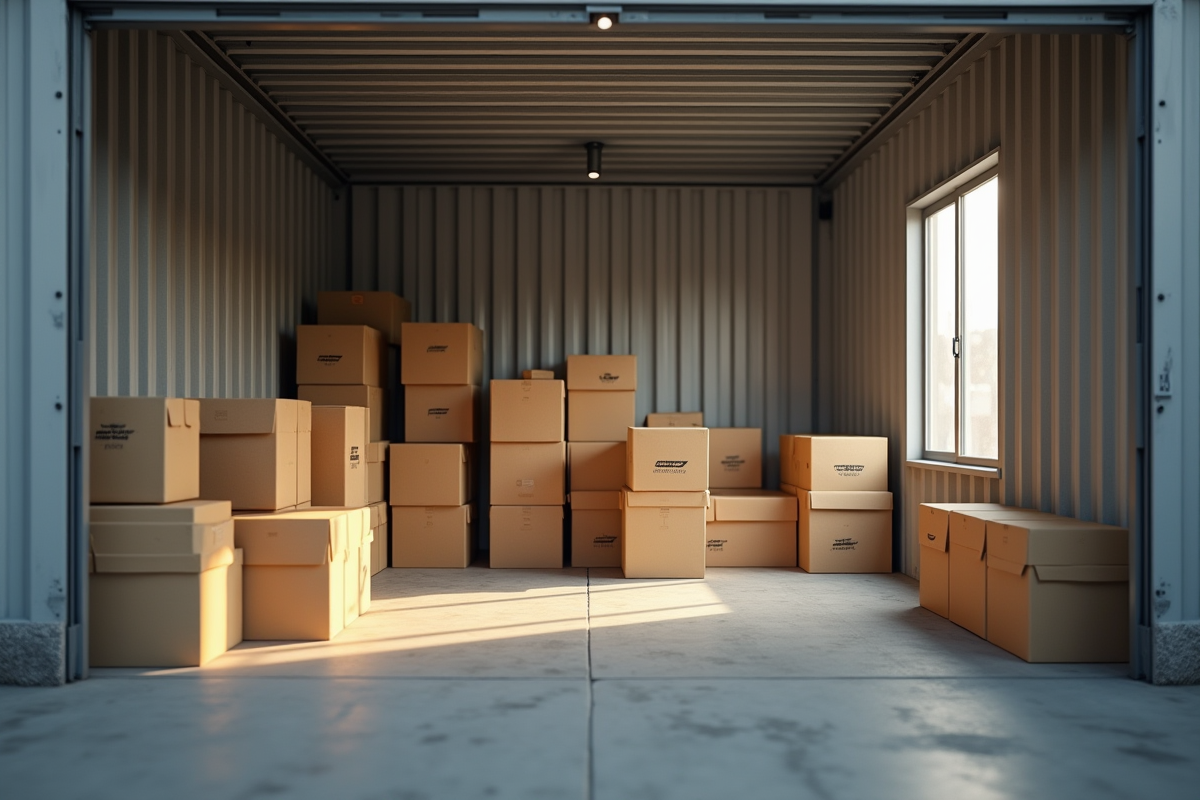
To refine your estimate, consider the shape of the items: a tall but narrow wardrobe, an extendable table, or stackable chairs. Start with the bulky items, sofa, bed, appliances, before calculating the space occupied by standard boxes. This method provides a clear view of the suitable storage box or the vehicle to reserve. A small detail that matters: ensure there is enough space to move around in a self-storage box. Overloading risks making it impossible to reach certain items without emptying everything.
For small moves, a notebook, a tape measure, and a bit of rigor are more than enough. As the volume increases, it’s better to switch to digital tools, which will enhance the furniture volume estimate and facilitate space organization.