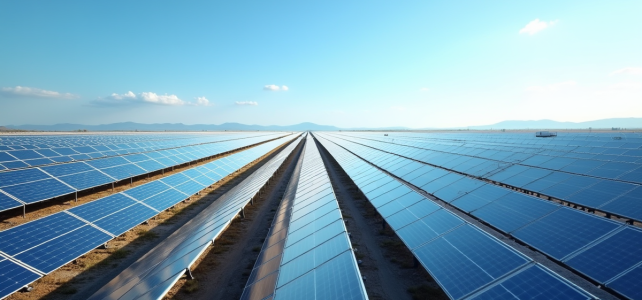
In 2023, over 80% of global electricity production still relies on non-renewable sources. However, some countries already showcase a predominantly clean energy mix, challenging traditional models.
Billions of dollars flow each year towards technologies whose long-term profitability remains debated. While promises of innovation multiply, the fragmentation of public policies and market volatility hinder a massive transition.
Why renewable energies are emerging as a response to current ecological challenges
The pressure related to greenhouse gas emissions continues to rise. The International Energy Agency sounds the alarm: if the world does not quickly shift to low-emission energy sources, climate change will spiral out of control. Energy demand is exploding, driven by urbanization and population growth, further exacerbating this imbalance. Fossil fuels, including oil, natural gas, and coal, still dominate, but this model is increasingly showing its limits. Coal-fired power plants, in particular, symbolize the deadlock, both environmentally and in terms of costs.
The development of renewable energies then emerges as a genuine exit strategy. Solar, wind, hydro: these sectors are game-changers, disrupting the energy mix on a global scale. Today, renewable electricity production is experiencing explosive growth, aided by falling production costs and ever-increasing yields. Photovoltaic solar energy attracts attention for its flexibility, while wind energy, whether onshore or offshore, is gaining strength with volumes that can compete with traditional energies. Every kilowatt-hour of renewable origin injected into the grid is another step towards breaking free from dependence on hydrocarbons and curbing emissions.
However, integrating these new energies into existing infrastructures is far from a smooth process. The technical challenges are numerous: networks must be made more flexible, effective storage solutions must be found, and production must be adjusted to real-time demand. Some players, like those mentioned in the future perspectives of Europlasma, are exploring new avenues: carbon capture and utilization, improved energy performance to limit intermittency… The obstacles are real, but collective momentum and innovation are accelerating the transformation. The energy transition is progressing, driven by a shared need for sobriety and new models.
Where to place hopes (and investments) to support the energy transition
The projects of the energy transition are numerous and offer a range of opportunities for investors looking to support this transformation. With demand intensifying and the necessity to shift to renewable energies, several major trends are shaping the sector.
Here are the main avenues that are currently attracting capital and ambitions:
- SRI funds and ESG strategies are taking root in the portfolios of both institutional and individual investors. These approaches prioritize companies that can concretely reduce their emissions and offer innovative solutions for the future.
- Green bonds serve as a driver to finance wind, solar, or low-carbon infrastructure projects. In 2023, their volume surpassed $500 billion, a testament to the growing market interest in renewable electricity production.
- Energy production and storage are undergoing rapid transformation, fueled by advancements in lithium-ion batteries and the widespread adoption of heat pumps. Hydrogen, supported notably by European industries, opens new perspectives for decarbonizing entire sectors of the economy.
Solutions are also evolving on the individual side: life insurance now accepts green unit-linked accounts, and crowdfunding allows individuals to direct their savings directly towards solar plants or smart grids. Energy technologies are shining well beyond the borders of wealthy countries: the rise in production capacities in emerging countries is reshuffling the cards of global investments.
Supporting the transition also means fostering the evolution of the electric grid, encouraging the growth of solar and wind energy, and betting on local resources. Investment choices, whether in green stocks, infrastructure, or innovations in storage, set the pace for the ongoing transformation.
The energy landscape is being reshaped before our eyes, driven by dynamics that disrupt habits and open up unprecedented perspectives. The bets placed today will shape the face of tomorrow’s society, far beyond the boundaries of the energy sector.