
The raw figures do not lie: an increasing number of French public institutions are venturing outside the traditional groove, experimenting with innovative pedagogical approaches with the sometimes discreet, sometimes enthusiastic blessing of academic authorities. Far from Paris, we are witnessing the birth of a new generation of public schools that, without changing their status or name, dare to shake up habits. National rules apply, but the spirit of initiative is taking on an unprecedented role.
In this movement, teachers from the public sector are no longer hesitating to collaborate with private collectives to invent new ways of learning. Rectors, who have long been cautious, are now validating these local alliances that, once confidential, are now displayed as examples to follow. What was once exceptional is gradually becoming a recognized component of French educational diversity.
Why pedagogical innovation is becoming a priority in regional institutions
The pressure from social changes and digital transformation has pushed many regional institutions to place pedagogical innovation at the heart of their actions. In the face of diverse students and pathways, teaching teams are seeking, testing, abandoning, or adapting systems that go beyond traditional models. Continuous training, supported by the national council for reform (CNR), plays a driving role in enabling each territory to imagine its own solutions.
The digital shift, far from being limited to the purchase of tablets, fosters the emergence of new forms of learning. The educational community, through initiatives like Sogo in Lille, is reinventing how students, parents, and teachers interact on a daily basis. Local actors, in coordination with the National Education, prioritize autonomy and cooperation, relegating top-down transmission to the background.
All over the territory, pedagogical research is directly entering the life of schools and colleges. Laboratories and institutions are joining forces to design and test new tools, closely connected to the field. This vitality is based on the diversity of pathways and local anchoring: each educational community addresses issues of development and inclusion in its own way. This collective dynamic is permanently shifting the lines, even in the daily organization of the school.
Inspiring educational projects that concretely transform the experience of students and teachers
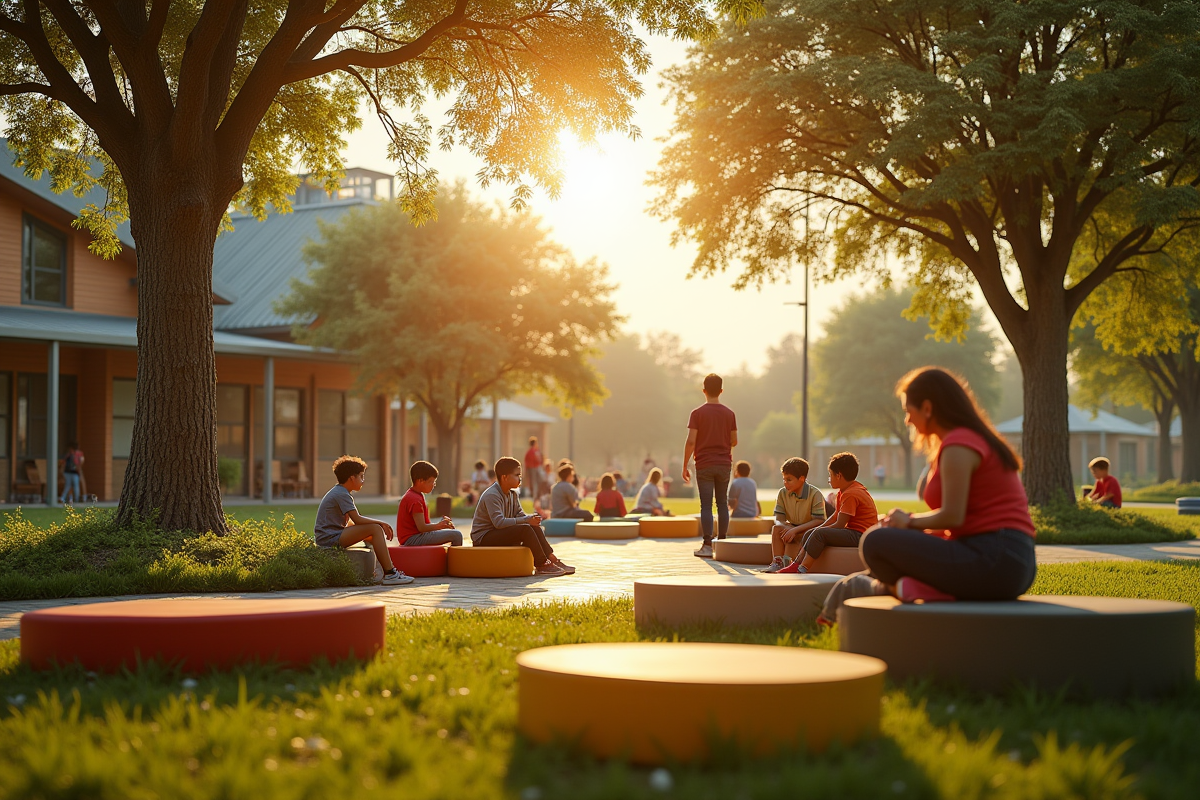
In innovative institutions, learning is built through a variety of concrete initiatives. In Montpellier, for example, educational projects are paving the way for renewed practices. Teachers, with the support of their educational community, are setting up workshops where experimentation takes precedence over simple memorization exercises. Students become stakeholders in their own learning journey, developing autonomy and critical thinking. The link between knowledge and reality takes shape through interdisciplinary projects, from primary school to high school.
Some examples illustrate these visible transformations:
- A downtown high school has launched a collective initiative around sustainable development, involving teachers and students in creating urban gardens.
- In various rural schools, networking among institutions encourages resource sharing and facilitates personalized support for students with disabilities or special needs.
Whether in Paris or elsewhere, the issue of project funding often remains decisive. School leaders, in connection with the CNR reform, are imagining new support systems to make these initiatives possible. Innovation is not limited to technology: it is also expressed in the ability to rethink the very organization of the school, to strengthen ties with the social environment, and to involve parents, associations, and local authorities in daily school life.
This movement adds more substance to education itself. Students, teachers, and local partners are collaboratively developing responses rooted in the reality of their territory. The educational approach then transforms into a true collective laboratory. And from one institution to another, the entire face of the school is being reinvented, far from rigid models, driven by the contagious energy of those who want to build other possibilities.