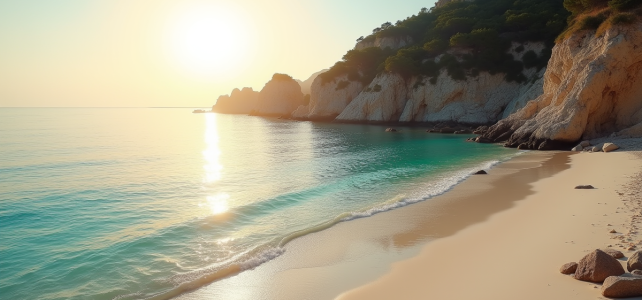
In Portugal, some coves do not appear on any tourist map, yet a handful of insiders access them every summer. On the Dalmatian coast, regulations sometimes prohibit access to the most popular beaches, but curiously leave untouched stretches free just a few kilometers away.
In Spain, a law protects natural sites, without preventing discreet visits by locals. Administrative borders do not always coincide with the reality on the ground: a beach may be overlooked by one region but famous in the neighboring municipality.
Why Europe Still Holds Secret Beaches Away from the Crowds
We think we know the European shores, but behind the smooth image of seaside resorts, Europe keeps some corners jealously preserved. These secret beaches are only revealed to those who venture off the usual paths. Sometimes, all it takes is to turn onto a small road, cross an old coastal village, to stumble upon a deserted cove, away from the tourist noise. It is these places, spared from standardization and crowds, that give Europe its true maritime face.
In these villages, life follows a different rhythm. You can discover fishermen’s markets where morning octopus is negotiated, restaurants where you can enjoy a local specialty just steps from the port, without having to elbow your way through. The architecture contrasts with the concrete areas: lime-washed walls, cobbled alleys, shaded squares where the elders chat on a bench. Here, every detail breathes authenticity, far from the noisy hustle of ultra-frequented sites.
The diversity of European landscapes also shapes these refuges. In Crete, for example, Voulisma Beach remains a striking example: a beach with clear waters, protected from large tourist developments. It is accessed via a discreet road, and the gaze wanders between the sea and wild vegetation. This absence of imposing hotel complexes preserves a rare atmosphere.
Here are the characteristics of these special places:
- Local markets that set the rhythm of village life
- An architectural heritage discovered while strolling
- Popular festivals and a cuisine unlike any other
Over the centuries, borders and stories have intertwined, creating peaceful enclaves where time seems suspended. It is difficult to find them without lingering, without accepting to slow down. But those who take the time to observe, to talk with the locals, discover a coastal Europe that rejects the postcard image, and prefers the whisper of the sea on the stone.
Confidential Itinerary: Five Hidden Gems to Explore for an Uncommon Getaway
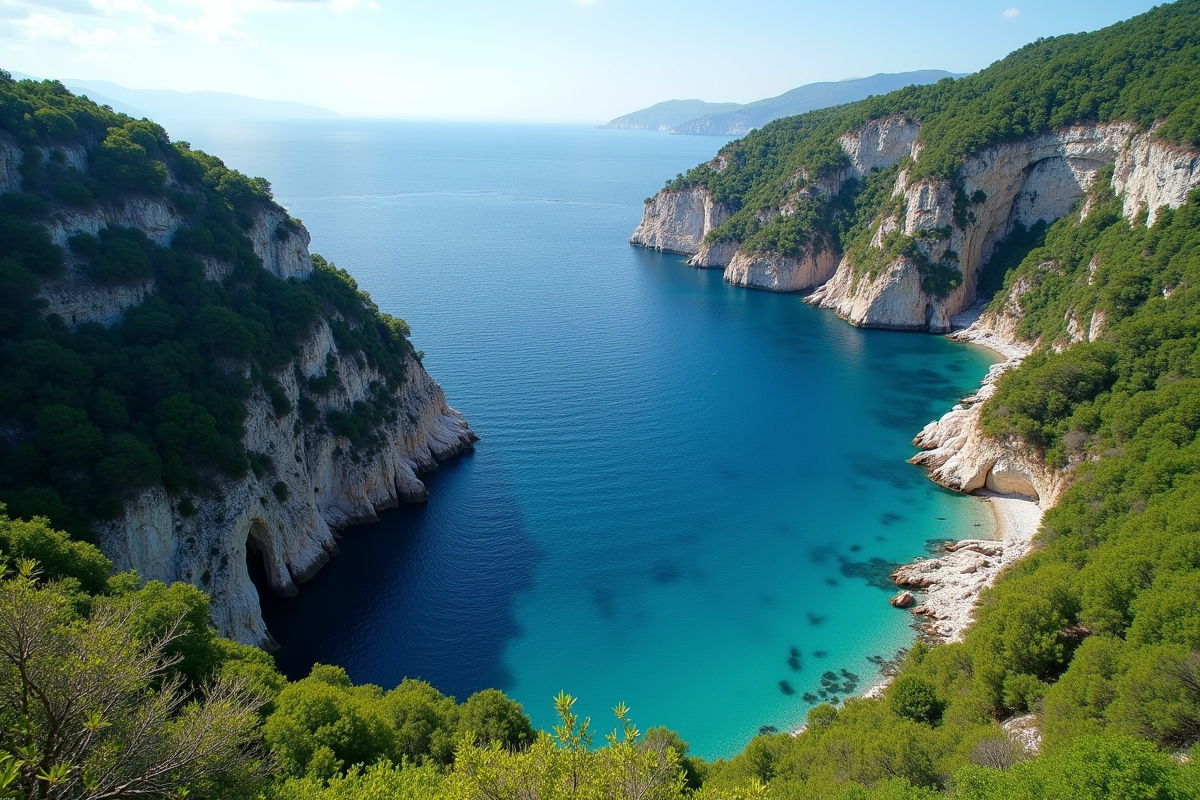
Discovering the secret beaches of Europe means choosing to stray from the tourist trail. There are addresses passed down among connoisseurs, or that one discovers somewhat by chance, by veering off the main roads.
First stop: the Paulilles cove, on the Vermeille coast. Here, the Mediterranean meets Catalonia, between vineyards and pine forests. This unique site bears the mark of an industrial history, with the former dynamite factory founded by Nobel. Now, Mediterranean gardens and pebbles invite relaxation, all in a protected environment. On site, a small museum tells the story of the place, far from beach clichés.
Next, we head to Chalcidice, in northern Greece. Three peninsulas, three different worlds: Kassandra, Sithonia, and Mount Athos. Between olive trees and maritime pines, light sandy beaches stretch as far as the eye can see. On the wild shores of Kavourotrypes or at the edge of Sani Beach, the transparent water seems unreal, contrasting with the whiteness of the rocks. A few villages maintain their traditions, away from commercial circuits.
In Corsica, Saleccia Beach deserves its nickname of hidden treasure. To access it, one must cross the Agriates desert, whether on foot, by 4×4, or by sea. The sand is of rare fineness, the sea stretches out in a palette of vibrant blues, and the horizon meets no buildings. The feeling of isolation is total, far from the crowded beaches of the south of the island.
Another setting, another atmosphere on the island of Madeira: Seixal Beach stands out for its black volcanic sand. Nestled at the foot of the UNESCO-listed Laurissilva primitive forest, it offers a striking contrast. You arrive after a few tight turns, and discover a raw landscape, between ocean and mountain.
Finally, we head to the Amalfi coast in Italy. The Furore Fiordo is unlike anything else: a mini-fjord hidden between two cliffs, topped with colorful houses. You descend by a steep staircase, and access an intimate cove, far from the crowds of Positano. It is these confidential places that draw a secret map of Europe, reserved for those seeking something more than just a towel on the sand.
In the background, these beaches tell another way of traveling: one that prioritizes discovery, conversation with locals, and the taste for the unexpected. The question remains whether, tomorrow, these gems will remain in the shadows or become the new beacons of the European coastline.